



Animal Classifications Unit Study
$15.00
Explore the animal kingdom with this colorful, kid-friendly Animal Classifications Unit Study!
✅ Animal diets made simple — herbivores, carnivores, and omnivores
✅ Body structure classification — vertebrates vs. invertebrates
✅ Animal groups covered — mammals, birds, reptiles, amphibians, fish, arthropods, mollusks, cnidarians, echinoderms, worms, and poriferans
✅ Ecosystem connections — food chains, food webs, consumers, decomposers, apex predators, and keystone species
✅ Big-picture biology — five kingdoms, ecosystems, animal roles, group behavior, and symbiotic relationships
✅ Hands-on activities — sorting, matching, true/false review, cut-and-paste pages, and fill-in-the-blank worksheets
✅ Print-and-go — colorful visuals and ready-to-use science pages for homeschool or classroom learning


Description
This 74-page Animal Classifications Unit Study introduces kids to the many ways scientists group and understand animals. From diets and body structures to ecosystems, food webs, and symbiotic relationships, this study gives students a strong foundation in life science using colorful visuals, kid-friendly explanations, and engaging activities.
Learners will explore how animals are classified by what they eat, whether they have backbones, how they interact in ecosystems, and how they fit into the bigger picture of living things on Earth.
Perfect for curious elementary learners, homeschool science lessons, classroom units, or nature-based learning.
What’s Inside:
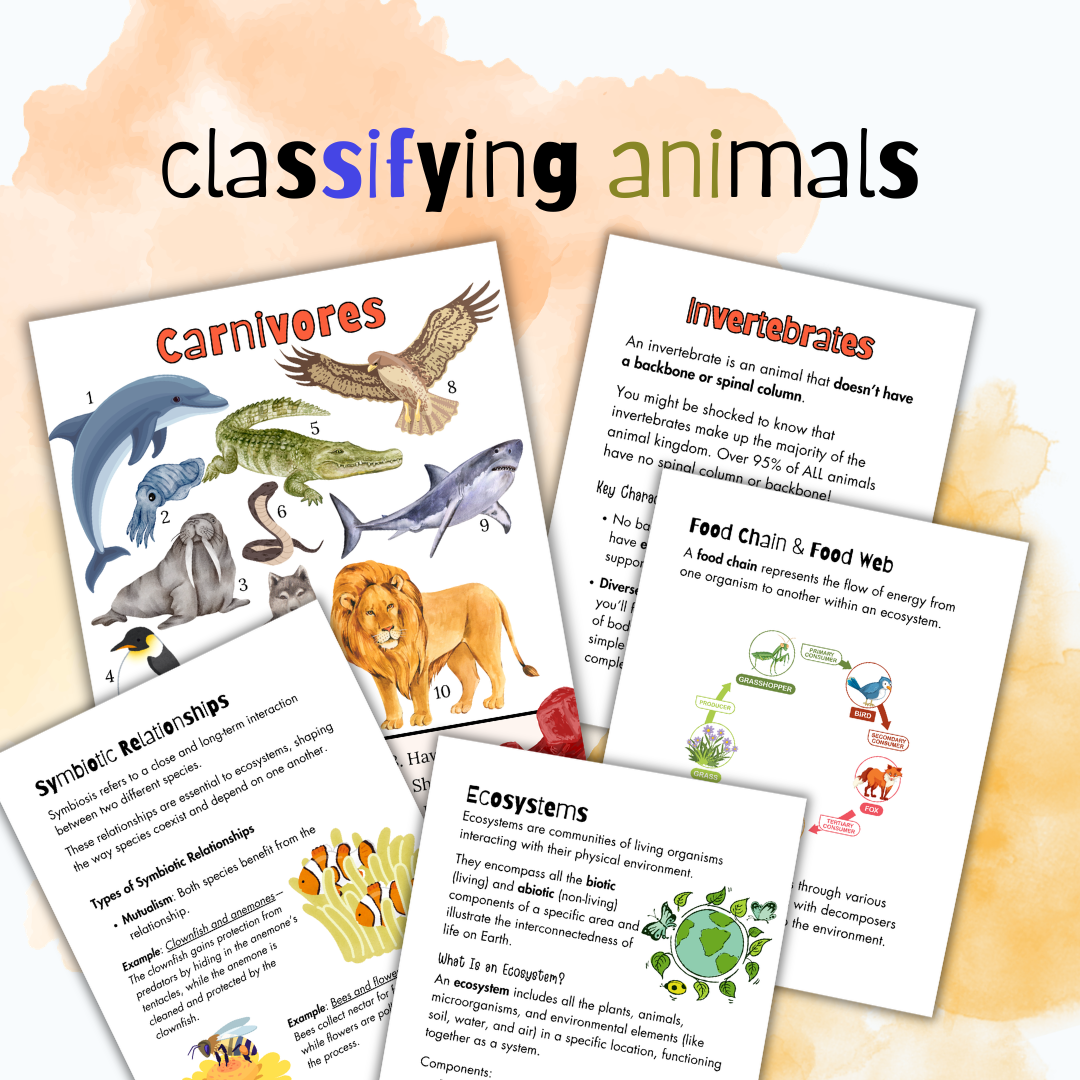
- Animal classification basics — why scientists classify animals and how classification helps us understand biodiversity
- Animal diets — herbivores, carnivores, and omnivores, including examples and adaptations for each group
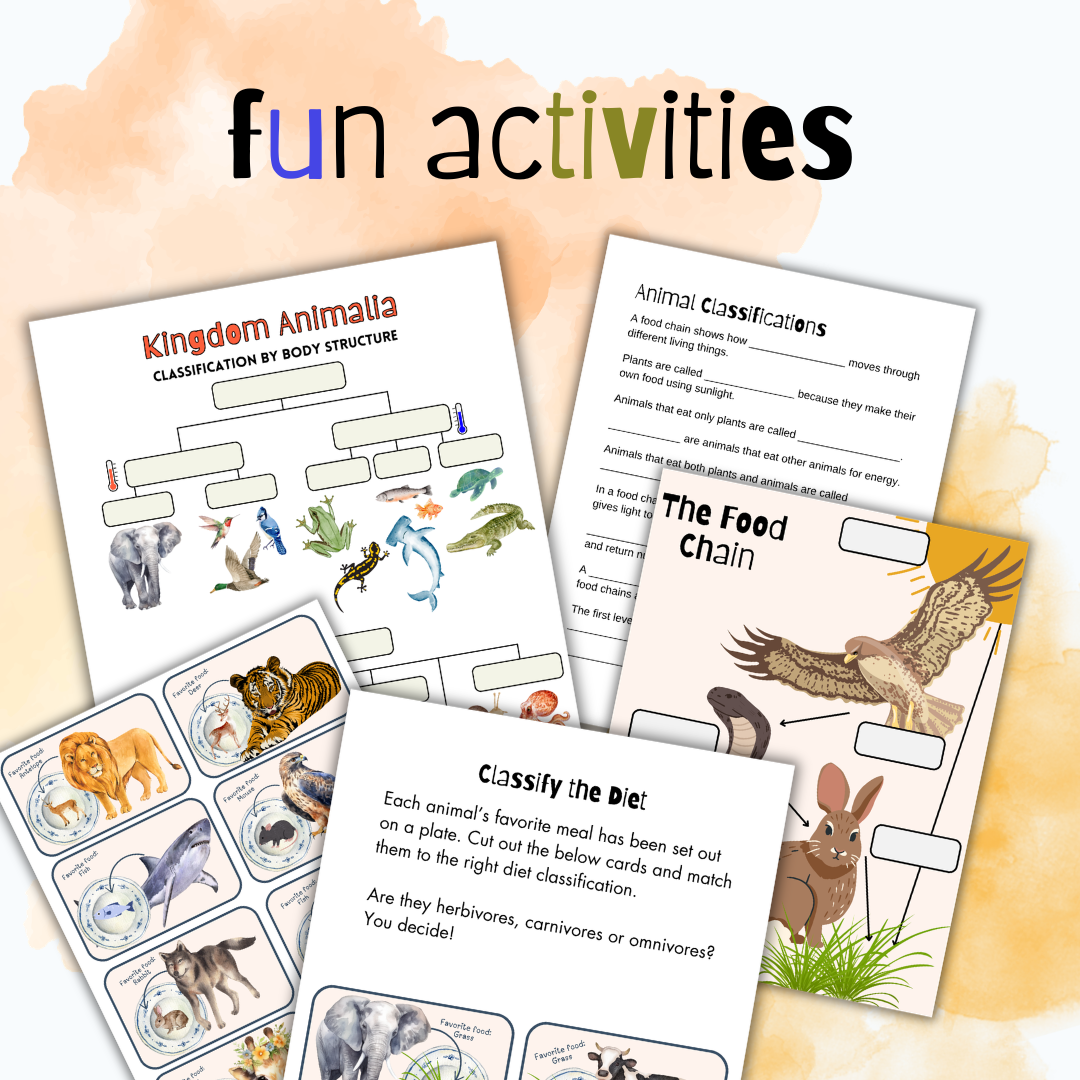
- Kingdom Animalia — a visual breakdown of animal classification by body structure
- Vertebrates — mammals, birds, reptiles, fish, and amphibians, with unique features and examples
- Invertebrates — arthropods, mollusks, cnidarians, echinoderms, worms, and poriferans
- Skeleton types — exoskeletons and hydrostatic skeletons explained in a kid-friendly way
- Food chains and food webs — producers, consumers, decomposers, energy flow, trophic pyramids, apex predators, and keystone species
- The five kingdoms — Animalia, Plantae, Fungi, Protista, and Monera
- Ecosystems — biotic and abiotic factors, terrestrial and aquatic ecosystems, and the important roles animals play
- Animal groups and behavior — prides, flocks, schools, herds, colonies, and solitary species
- Symbiotic relationships — mutualism, commensalism, and parasitism with real animal examples
Interactive Activities Included:
- Classify the Diet cut-and-sort activity
- Herbivore, carnivore, and omnivore sorting pages
- Five Kingdoms review page
- Kingdom Animalia classification activity
- Vertebrate vs. invertebrate animal sorting
- Animal Classifications true-or-false review
- Food chain fill-in-the-blank worksheet
PLEASE NOTE: This is a digital download product. No physical product will be sent to you. You will receive a PDF file, sized US Letter, for printing. I recommend printing activity pieces on heavier cardstock and laminating them for durability.



Reviews
There are no reviews yet.